Kate and I had fun making this short video. Each time Kate uses any press in our workshop, she carefully oils all the moving parts. It's fairly easy to figure out where to put the oil - you move around the machine and look for small holes - then just pour a few drops of oil into each one. Learn more (including how we use chopsticks in the studio!) by taking a look at the video:http://www.youtube.com/watch?v=eOFxIr9mxtk
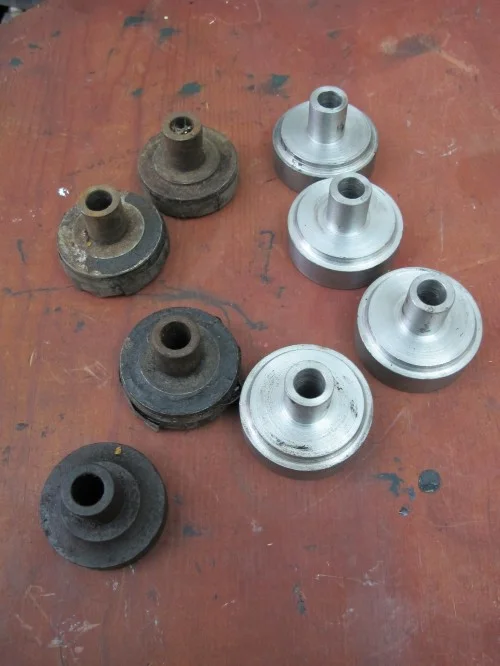
I wanted to post a photo of the letterpress trucks. These are at either end of the rollers. Check out the difference between the old version and the newer items! You can see the effect of age on these trucks.
I asked Kate if we are going to throw away the old trucks but she explained that they should still be 'fit for purpose'. They just need a really good clean - it's going to be a fairly labor-intensive mission! We'll post more photos as we clean them up!
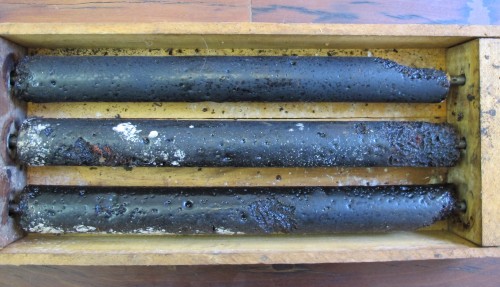
Before Kate gets started fixing up our letterpress, she did a thorough audit of all the parts to see what was redeemable and which bits of kit had reached the end of their lifespan.Sadly, the rollers were just not up to scratch. The material had decomposed - most likely from lack of use. That said, letterpress rollers usually need to be replaced around every ten years so we expected that this would be a spare part we would have to factor in.
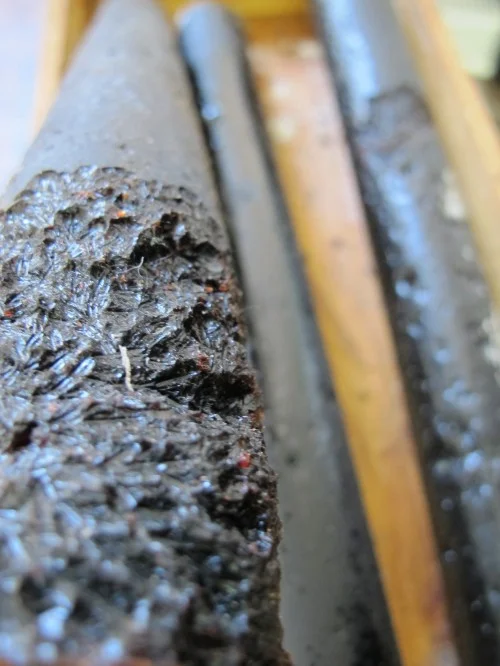
Yikes: it almost looks like a small animal has been gnawing on the rollers: here's a close-up of one of them:
Interestingly, the Golding Jobber holds three rollers, but we often print using just two and the results are the same.
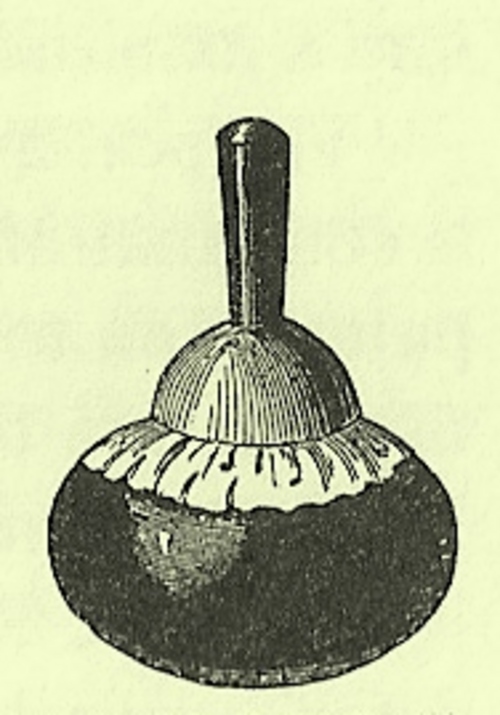
The purpose of the rollers is to transfer ink onto the plate, which is then pressed into the paper stock, leaving a de-bossed mark. Since the beginning of letterpress, the concern has always been how to ensure that ink is transferred with consistency and equal pressure. In the very early stages, printers applied the ink manually, using something called an ink ball or dabber which consisted of a wooden handle and sheepskin bag filled with horsehair:
In 1818, Robert Harrild developed the first ‘composition roller’, made of glue (from calfskins) and treacle. Needless to say, though this was an improvement on the dabber, it was still not ideal. Luckily, in the intervening years, the materials used for rollers have improved and they now have a much longer lifespan (and they are not made from treacle!)
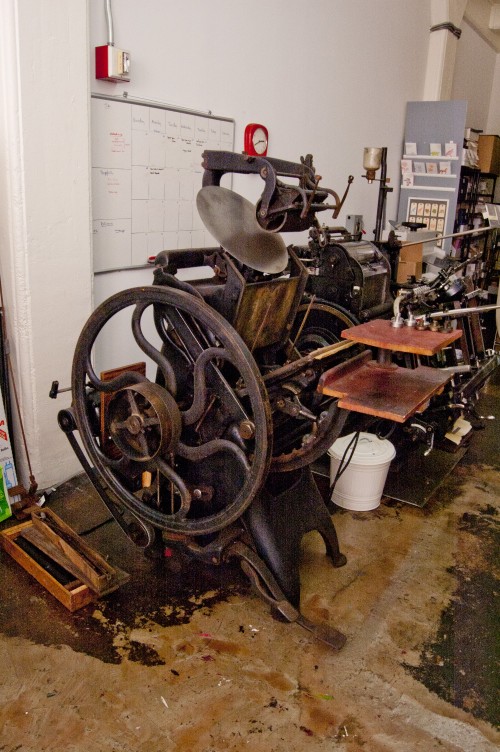
We have a wonderful late 19th Century Golding Jobber No. 7 letterpress here in our studio. It's not in great shape so it's been sitting at the side, making us feel a little guilty for not using it.Finally, with the winter months approaching we have time to take on a new task and we are giving ourselves the challenge of bringing this awesome machine back to peak performance. Kate, our letterpress whiz, will be cleaning up the press, fitting new parts and generally ensuring that the press is shipshape and ready for another 100 years of printing!
Here's how the Golding Jobber looks at the moment:
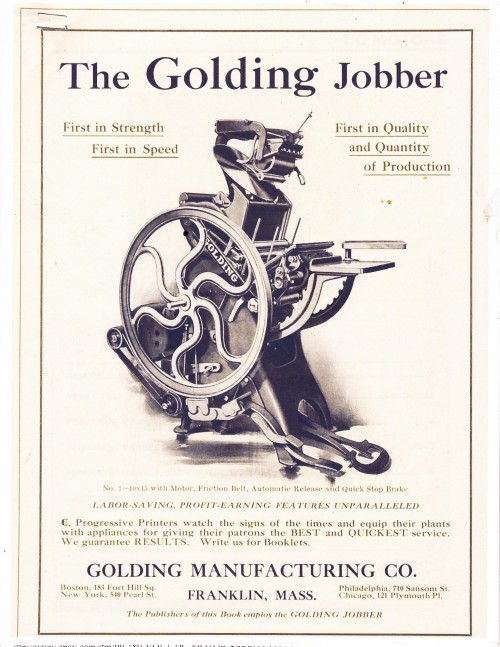
When we bought this press, we also got a copy of the original advert! We love the old school look of it:
Keep checking our blog for updates on our progress with the Golding Jobber No. 7!
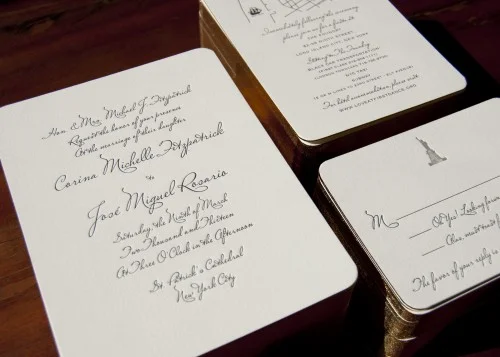
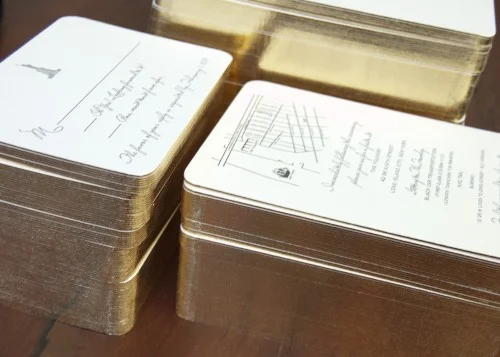
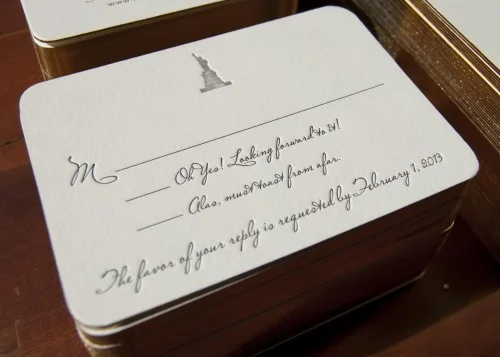
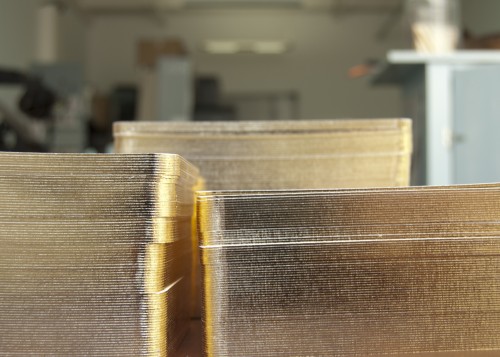
We just printed a suite of gorgeous wedding stationery for Corina and Jose. We love how the quite luxuriant gold edging is offset by the classy black script. Add in some subtle New York illustrations and it's a recipe for a beautiful invitation!
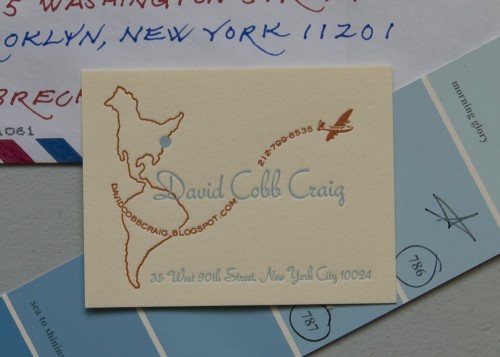
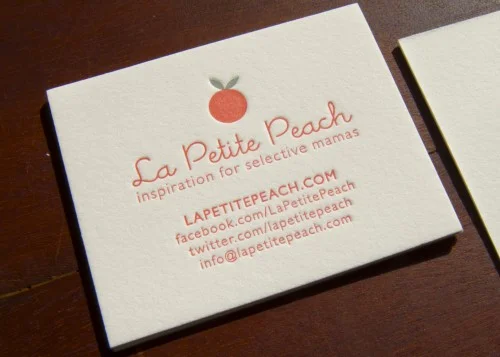
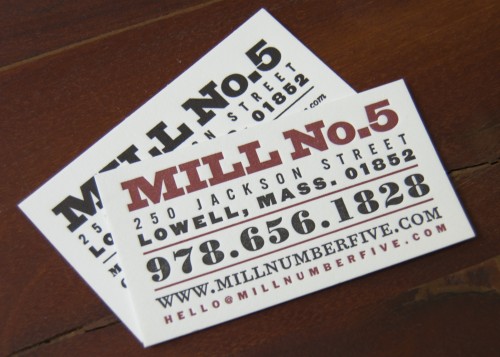
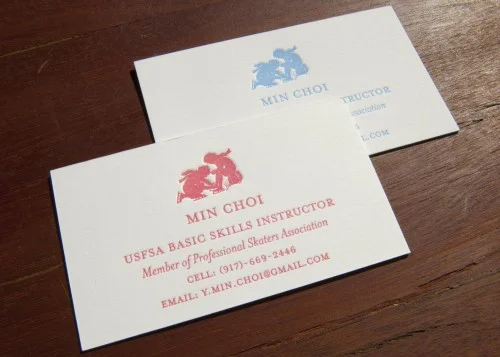
Here are a few more examples of some business cards we have really enjoyed designing and printing.
There's something lovely and tactile about a letterpress business card - you can really feel the indentation of the type on the card.
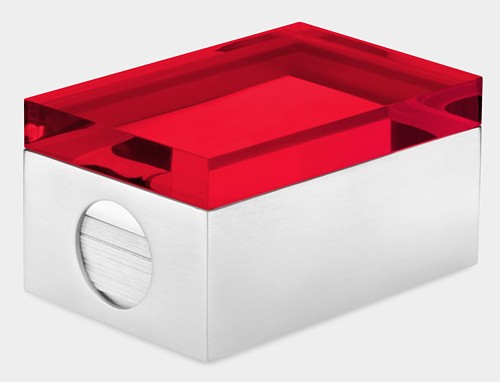
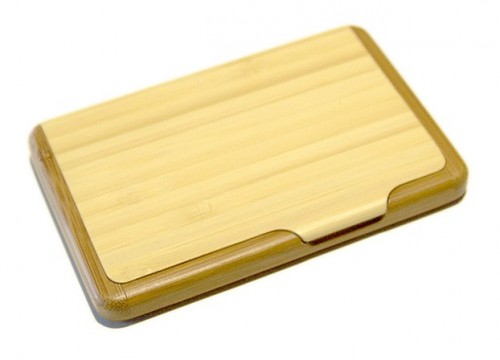
Once you have purchased your business cards, you might also want to think about keeping them in a nice holder! Here are a few options that we are really fond of - just click on the image to link to the store...
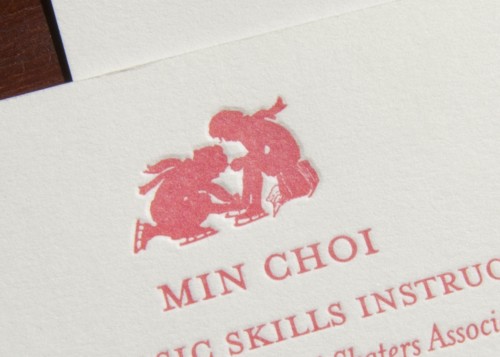
A business card can express something of the personality and interests of the person who gives it. This may be as simple as choosing a small image that represents your line of work:
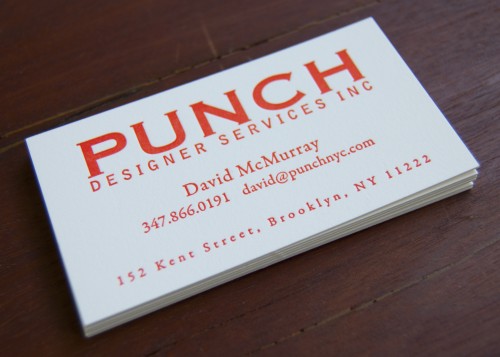
Or it could be communicated via the choice of font and color:
In Japan, the business card or "meishi" is quite an important item in terms of how it is exchanged and received. The card should be held at the bottom two corners, face up and angled so that it can be read by the person receiving it. The recipient takes it by the top two corners using both hands. Placing one's fingers over the name or other information is considered rude. Upon receiving the card, one is expected to read the card carefully, noting the person's name and position. It's an acknowledgement of the status of the person giving the card - definitely a different experience to the more Western approach to distributing business cards!